
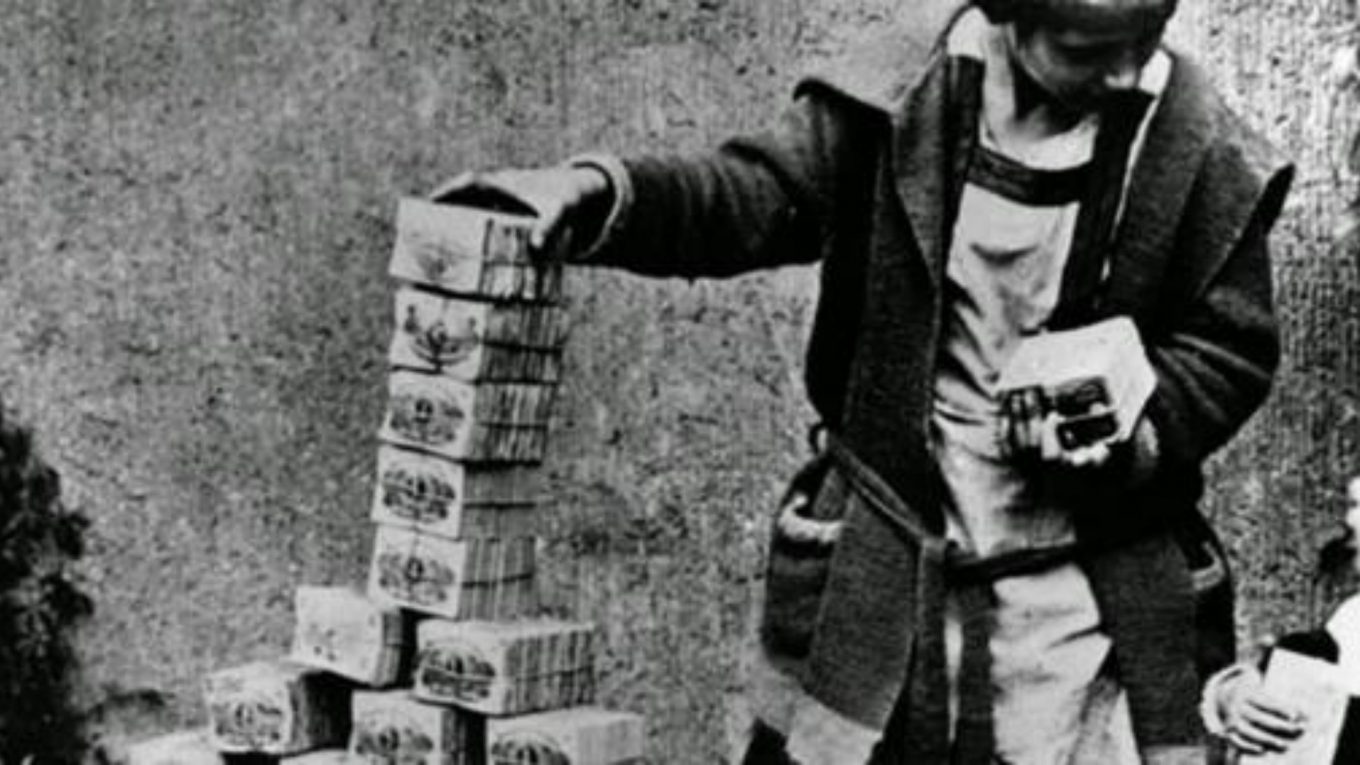
The Collapse of the Weimar Mark
The image of German children play with stacks of money during the hyperinflation period of the Weimar Republic (1921–1924) became synonymous with the events initially triggered by Germany’s decision to finance World War I entirely through borrowing rather than taxation. Following the war, the economic situation deteriorated rapidly when the 1921 “London ultimatum” demanded massive reparations to be paid in gold or hard foreign currency. To meet these crippling financial obligations, the German government resorted to mass-printing its own currency, the Papiermark, to purchase foreign exchange. This strategy backfired severely, steadily eroding the purchasing power of the Mark and initiating a devastating inflationary spiral.
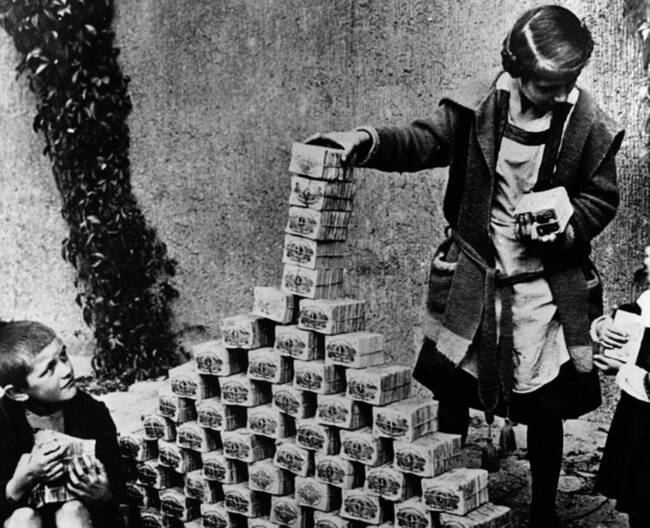
The crisis escalated into catastrophic hyperinflation in 1923 after French and Belgian troops occupied the industrial Ruhr valley to forcefully extract unpaid reparations in the form of physical goods. When German workers responded with a general strike, the government printed even more money to financially support their “passive resistance,” which completely destroyed the currency’s remaining value.
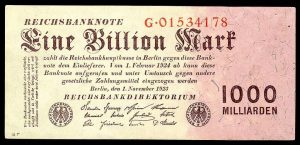
By November 1923, the exchange rate had plummeted to an absurd 4.2 trillion marks to a single US dollar, collapsing the economy and inducing such profound financial trauma that some citizens reportedly suffered from psychological compulsions like “zero stroke.” A condition where a person (Bank tellers, accountants, shop clerks, and ordinary citizens) became completely overwhelmed. The “compulsion” was a mental break where individuals could not stop writing zeros, fixating on numbers, or attempting complex, meaningless calculations. It was a physical and mental manifestation of their entire reality spinning out of control.