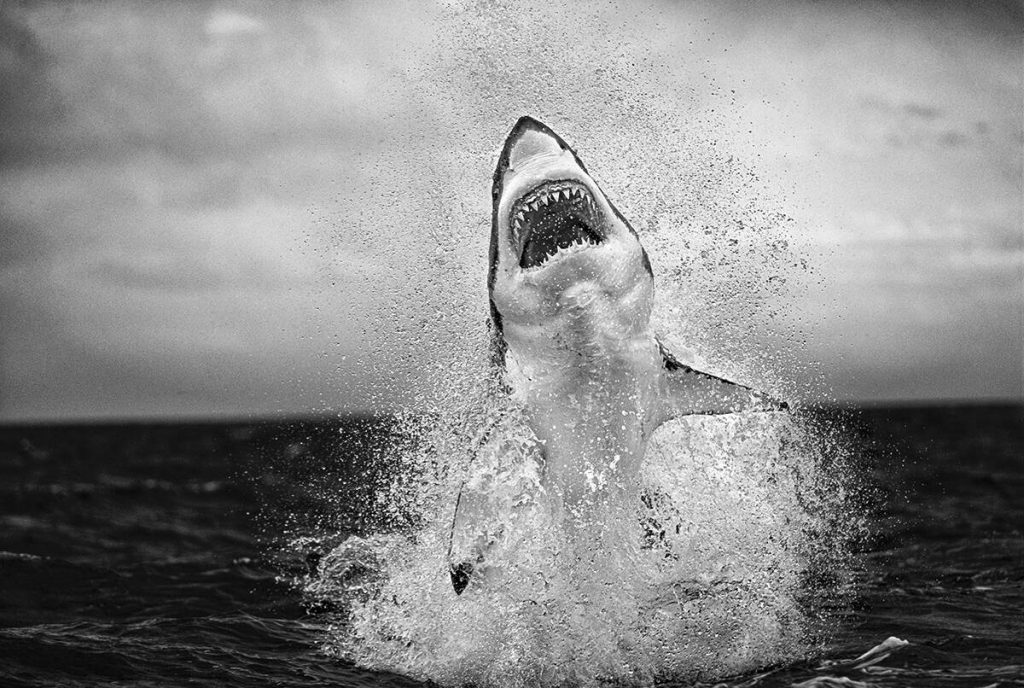
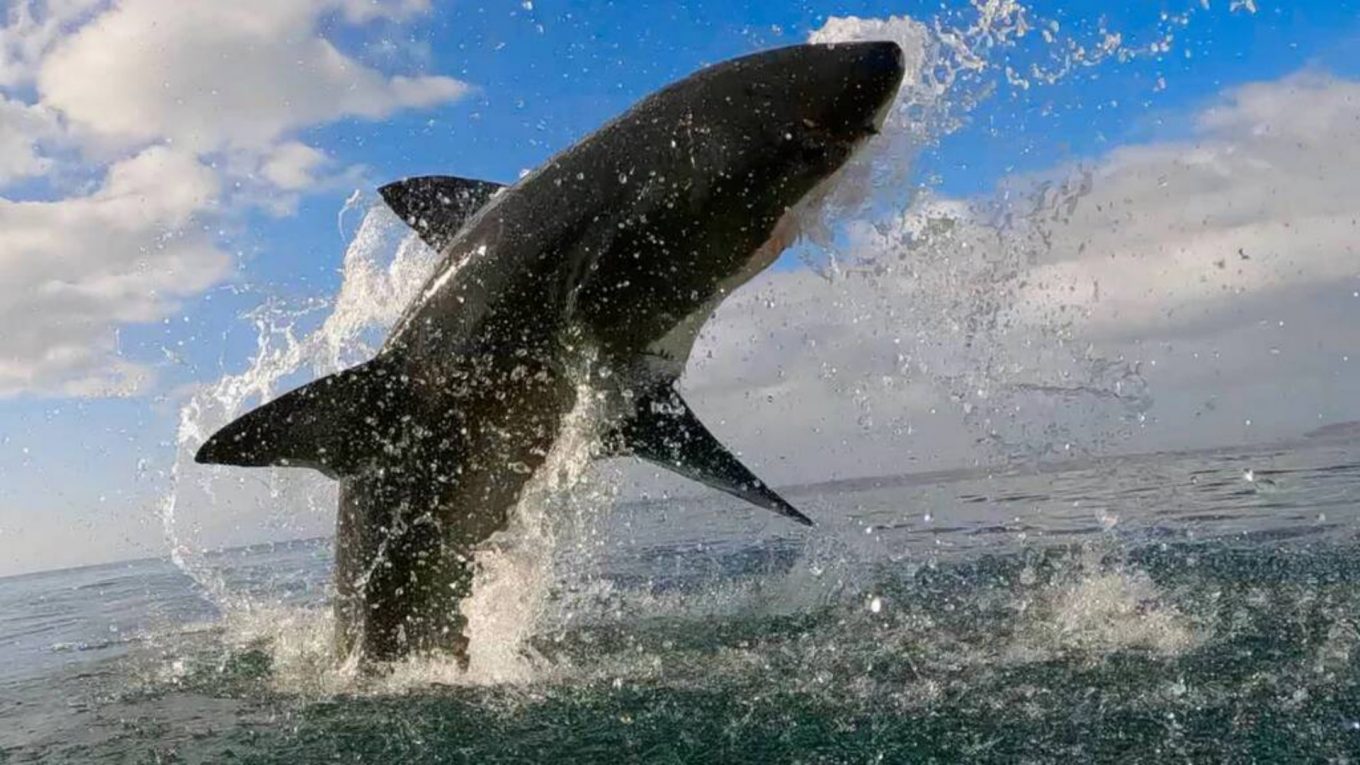
Shark breaching behavior
Breaching behaviour occurs when a shark accelerates at high speed toward the surface, using its momentum to launch partially or completely out of the water. This dramatic hunting technique is most famously associated with the great white shark when preying on Cape fur seals. It is particularly well documented at Seal Island, where the unpredictable nature of breaches once made them difficult to study. Early photographic evidence was captured by Chris Fallows and Rob Lawrence, who pioneered the use of a slow-towed seal decoy to reliably trigger this behaviour. In this region alone, around 600 natural predatory events are recorded each year between April and September.
During these hunts, seals typically travel along the surface, unaware of danger below, while the sharks rise rapidly from deeper water to ambush them. Reaching speeds of up to 40 miles per hour, the sharks can propel themselves more than 10 feet into the air in pursuit of their prey. Despite the precision and power of these attacks, recorded data shows that success rates remain just under 50%, highlighting both the difficulty and energy demands of this striking predatory strategy.