
A Farewell to Mario Adorf
It’s very sad to hear of the passing of Mario Adorf on the 8 April at the age of 95, a performer whose rugged presence and magnetic unpredictability left an indelible mark on Italian action films and Spaghetti Westerns.
Though born in Germany, Adorf became a familiar and formidable face in Italy’s golden age of popular cinema, effortlessly slipping into a wide range of roles. This is what made Mario Adorf so compelling, his refusal to be easily categorised. He wasn’t a conventional leading man, nor a simple character actor. He existed somewhere in between and thrived in morally complex worlds, where heroes were flawed, villains were charismatic, and the line between justice and brutality was often blurred. His performances carried a raw physicality and intensity that made him stand out, whether he was playing a ruthless outlaw, a conflicted antihero, or a quietly menacing authority figure.
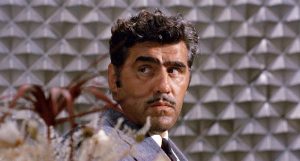
In what is arguably the greatest Italian crime film ever made, Caliber 9 (Milano calibro 9), Adorf played Rocco Musco, a high-strung, ultra-violent mob enforcer. While most actors would play a hitman with quiet menace, Adorf played Rocco with a lit fuse, ready to explode. His constant sweating, shouting, and physical unpredictability made him the perfect foil to Gastone Moschin’s stoic lead. Quentin Tarantino has frequently cited this film (and Adorf’s performance) as a major influence on his own work.
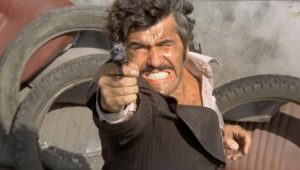
Following this, Adorf took the lead in the followup movie The Italian Connection (La mala ordina)playing a small-time pimp framed for a shipment of missing heroin. The film is famous for a relentless foot and car chase through the streets of Milan. Watching the burly Adorf sprint, jump, and fight for his life against two American hitmen (played by Henry Silva and Woody Strode) is a masterclass in physical acting.
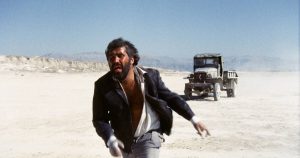
However, my absolute favourite performance has to be Deadlock (1970.) Directed by Roland Klick, stripping the Western genre down to its bare, sun-bleached bones. The film is set in a ghost town in the middle of a scorching desert, where three men fight over a suitcase full of loot from a bank robbery. Deadlock is the bridge between Adorf’s work in Italian genre cinema and the more “intellectual” New German Cinema movement. It proved that he didn’t need a massive script or a huge cast to carry a film. Deadlock works with just a desolate landscape and a reason to be desperate.
Adorf left behind over 200 credits, but for fans of “Cult Cinema,” he will always be the man in the leather jacket or the dusty poncho, the actor who proved that a villain could be the most human person on the screen.
Other recommended viewing: Execution Squad (La polizia ringrazia) (1972), What Have They Done to Your Daughters? (La polizia chiede aiuto) (1974), The Assassination of Matteotti (Il delitto Matteotti) (1973) … Oh hold I could go on!!!