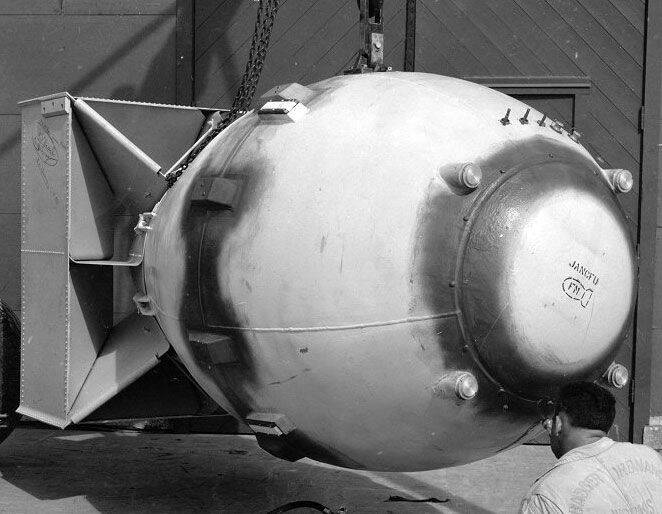
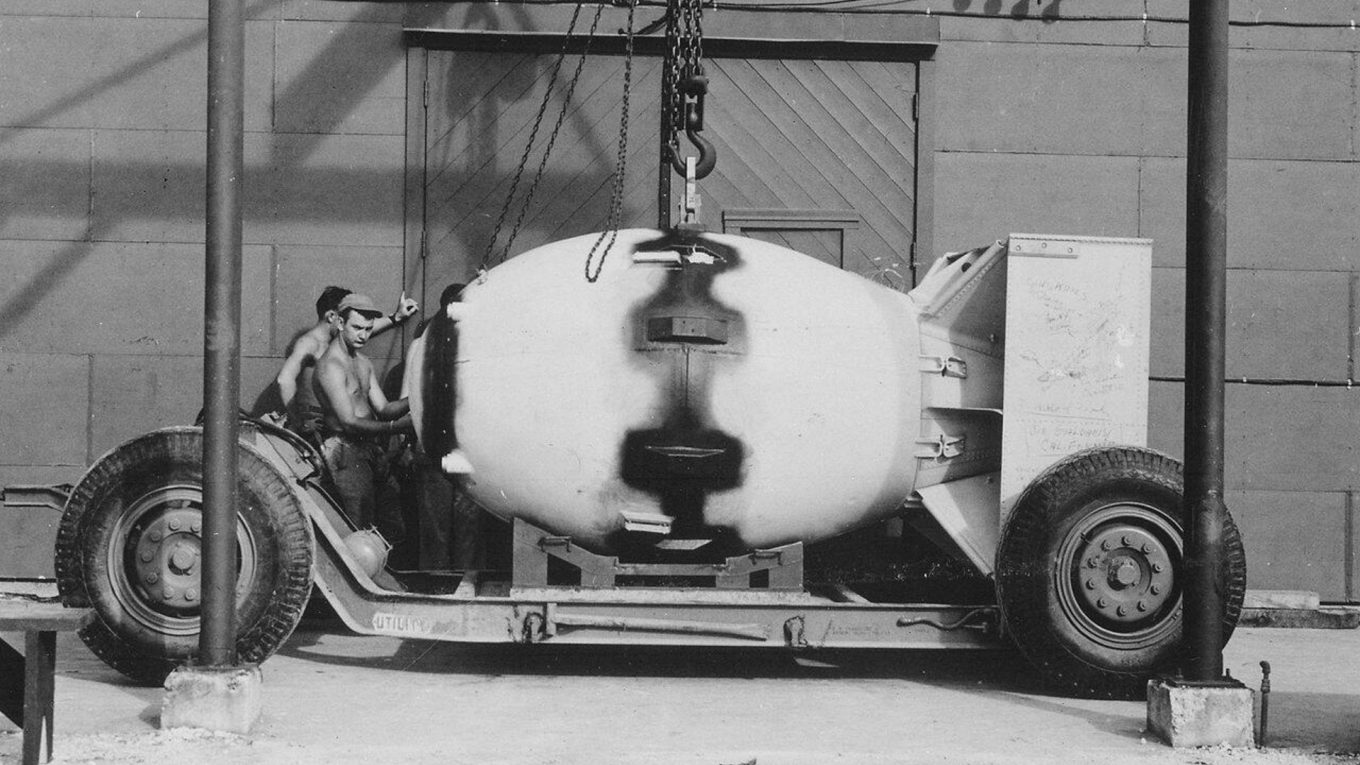
When Fat Man Shook the World.
“Fat Man” was the codename for the plutonium atomic bomb dropped by the United States on Nagasaki, Japan, on 9 August 1945. It was the second and last nuclear weapon ever used in warfare, following the bombing of Hiroshima three days earlier with “Little Boy.” The bomb was carried aboard the Boeing B-29 Superfortress Bockscar, piloted by Major Charles W. Sweeney. Despite discovering before take-off that a faulty fuel transfer pump would leave thousands of litres of reserve fuel unusable, commanders chose to proceed rather than risk transferring the live bomb to another aircraft.
The original target was the city of Kokura, but heavy cloud cover and smoke from previous bombing raids prevented a clear visual drop after three attempts. Running low on fuel and facing increasing anti-aircraft fire, Sweeney diverted to the secondary target, Nagasaki. Although cloud cover also obscured the city, bombardier Captain Kermit Beahan spotted a break in the clouds at the last moment, allowing “Fat Man” to be released. The bomb detonated at 11:02am local time, devastating much of Nagasaki and destroying the Mitsubishi-Urakami Ordnance Works. An estimated 40,000 people were killed instantly, with many thousands more later dying from injuries and radiation sickness.