A Farewell to Gerrit Graham
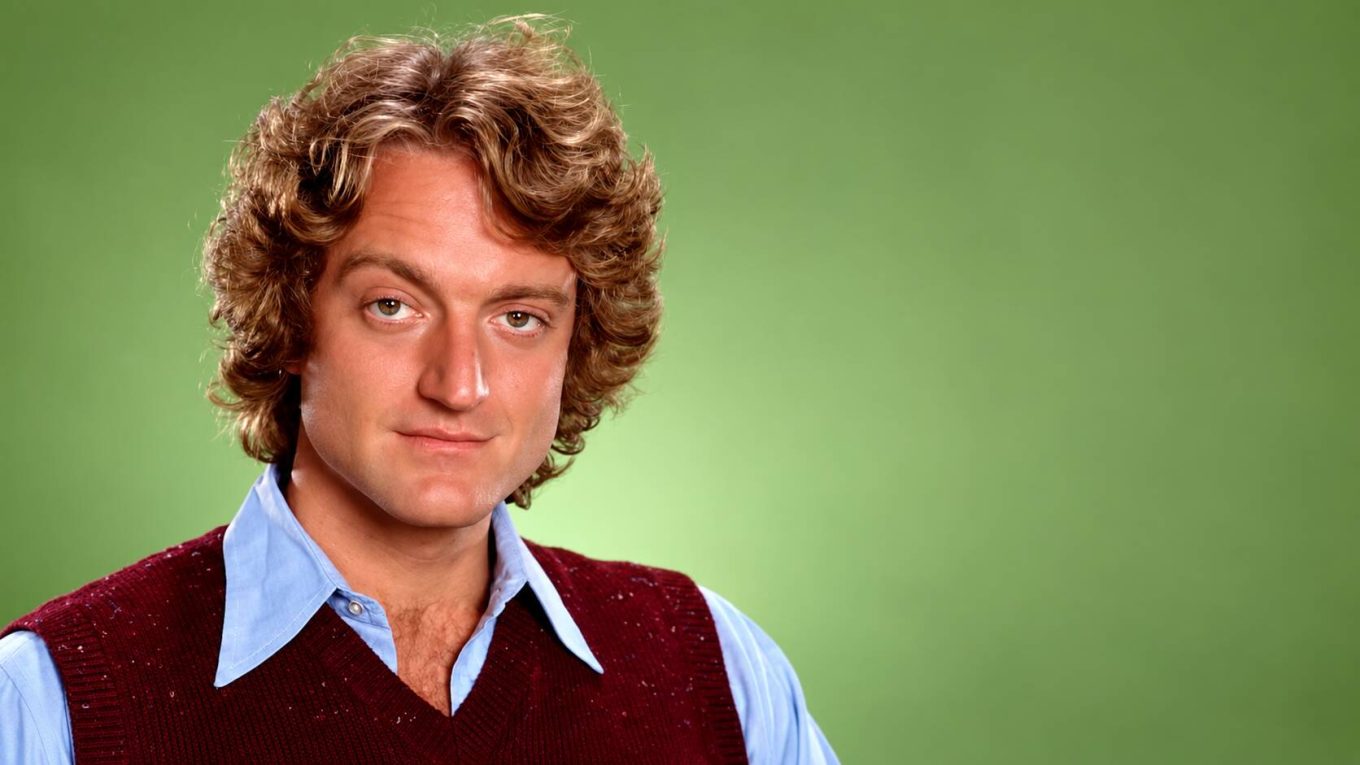
There are certain actors whose names appearing in the opening credits of a film immediately make you smile. You might not know exactly what role they are going to play, but you know you’re going to enjoy watching them. For me, Gerrit Graham was one of those actors.
I was a huge fan of Gerrit Graham and, over the years, became something of a collector of his movies. I’ve watched most of his work, from the cult classics and horror films to television appearances, comedy, science fiction and voice work. His death is therefore one of those pieces of news that hits a little harder than it might for the casual movie fan, because Graham wasn’t simply an actor I recognised – he was an actor I actively sought out.

Graham died on September 15, 2026 from a lung disease, aged a mere 76, leaving behind one of those wonderfully varied careers that is difficult to neatly categorise. And perhaps that is exactly what made him so much fun to watch.
For many cult movie fans, Gerrit Graham will forever be Beef from Brian De Palma’s Phantom of the Paradise (1974). It is an extraordinary performance in an extraordinary film. Beef is flamboyant, vain, insecure, hilarious and completely unforgettable, and Graham throws himself into the role with an incredible energy. While Phantom of the Paradise may be the obvious starting point, it barely scratches the surface of Graham’s career.

His association with Brian De Palma actually goes back to Graham’s earliest film work. He appeared in Greetings (1968) and Hi, Mom! (1970), before returning for Phantom of the Paradise and then Home Movies (1980). That connection gives Graham an interesting place in the history of American cult cinema, having worked with De Palma from the filmmaker’s earliest days.

Then there is Used Cars (1980), one of those films that I could happily recommend to anyone wanting to see what made Graham such a brilliant character actor. I recently went overboard about Used Cars here.
In the 80’s he appeared in an incredible slew of genre movies Demon Seed, The Annihilators, Class Reunion, The Creature Wasn’t Nice, TerrorVision, Chopping Mall, It’s Alive III: Island of the Alive, The Philadelphia Experiment 2 and Child’s Play 2, among many others. For someone like me, who loves cult horror, ’70s and ’80s genre cinema and those wonderfully strange films that were often tucked away on video shelves, this is where Graham’s filmography becomes particularly rewarding.


TerrorVision is a perfect example. Another film I have yammered on about, Graham plays Stan Putterman, the father of an incredibly dysfunctional suburban family who find themselves dealing with a television set that has rather more than the usual selection of channels. It is gloriously ridiculous ’80s horror-comedy, and Graham fits perfectly into its heightened world.

Then there’s C.H.U.D. II: Bud the Chud, where the title character’s very existence tells you pretty much everything you need to know about the film. Graham understood exactly how to play this sort of material. He could embrace the silliness and Graham never seemed embarrassed to be in a strange film. He could play the material straight while simultaneously understanding exactly what made it funny. Graham would also adopt Bud T. Chud as an alternate credit for cameos.
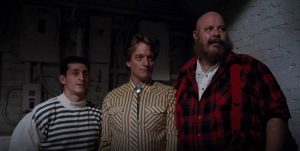
What can sometimes get lost when talking about Graham is that he was an actor first. Yes, films such as Police Academy 6: City Under Siege, countless television appearances and some decidedly ropey made-for-TV comedy movies sit among his credits. But judging Graham solely by some of the material he found himself working in would be to seriously underestimate him. Put him in the right role and Graham could be absolutely electric.

He proved that right from the beginning of his film career. In Brian De Palma’s Greetings (1968), Graham manages to steal scenes from a cast that includes Robert De Niro, an extraordinary achievement when you consider what De Niro would go on to become. Graham returned for De Palma’s Hi, Mom! and appeared alongside De Niro again in This Boy’s Life.
His ability to command attention wasn’t confined to comedy or cult cinema either. Alex Cox’s Walker (1987) gave Graham a particularly juicy role, while his appearance in Dynasty provided another reminder that he could go toe-to-toe with major stars – and, in this case, more than hold his own opposite Harrison Ford.

Then there is Soup for One (1982), which might be one of the best examples of why I think Graham deserves to be remembered as much more than a cult character actor. It is the sort of performance that demonstrates just how damn good he could be when given the opportunity.
That versatility is really the key to Graham’s career.

His television career was equally diverse. He appeared in shows including The A-Team, Miami Vice, Tales From The Crypt, The Wonder Years, Seinfeld, The Larry Sanders Show and Law & Order, and the Blazing Saddles pilot, Black Bart demonstrating just how adaptable he was. He was also part of the Star Trek universe, appearing as Tosk in Deep Space Nine and Quinn in Voyager. Sticking with sci-fi, he would score a terrific role in the beloved one season sci-fi show Now and Again.


The Star Trek connection is particularly interesting because Graham was reportedly considered for the role of Odo on Deep Space Nine before Rene Auberjonois ultimately took the part. It’s fascinating to think about the alternate universe in which Gerrit Graham became the shape-shifting Constable of Deep Space 9.
And Graham’s talents extended well beyond acting. He was a writer, songwriter and voice actor, contributing to projects including The Twilight Zone revival and Disney’s The Little Mermaid. He also provided the voice of Franklin Sherman, Jay Sherman’s father, on The Critic.
Perhaps the most unexpected piece of trivia about his career is that Graham co-wrote the Grateful Dead song “Victim or the Crime” with Bob Weir. Graham supplied the lyrics while Weir wrote the music.
There was something immediately recognisable about him. He had a distinctive face, voice and presence, but more importantly, he had that invaluable character-actor quality where you could drop him into almost any story and he would make the world of the film feel richer.
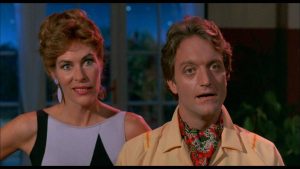
For me, discovering an actor like Gerrit Graham is one of the great pleasures of collecting movies. You start with one film that makes an impression. Perhaps Used Cars. You spot his name somewhere else. Then you find Police Academy 6. Then TerrorVision. Then Chopping Mall. Then C.H.U.D. II. Before long you’re deliberately hunting down films simply because Gerrit Graham is in them. Once you arrive at Phantom of the Paradise and Soup for One you are a fan. That’s how it happened to me.

I’ve collected his movies and watched most of his work over the years, and looking back over his career now, I’m reminded just how much he brought to the films I love. Some of those movies are classics. Some are cult favourites. Some are gloriously silly. Some are probably best described as films that could only have been made in the decade in which they appeared. But Gerrit Graham always made them more interesting.
That’s the real legacy of a great character actor, and one of my favourites. Thank you for all the strange movies, memorable characters and wonderful performances.
Rest in peace Gerrit. You will be missed.