Kamikaze at Okinawa
In early April 1945, during the final and most ferocious stages of the Battle of Okinawa, the U.S. Fast Carrier Task Force, supporting the amphibious landings, faced relentless attacks from Japanese kamikaze pilots. Intelligence gathered from a surviving pilot who had bailed out on April 6 suggested a major strike was imminent. Anticipating this, U.S. commanders strengthened their combat air patrols, aiming to intercept incoming aircraft before they could reach the fleet. On April 11, radar picked up a large formation at 1:30 p.m., and by 2:00 p.m. the general alarm rang out. Aboard the cruiser USS Astoria, the gunnery officer warned his crew that dozens of enemy planes had slipped through the combat air patrols and were closing in fast. An ominous sign that a major engagement was about to unfold.
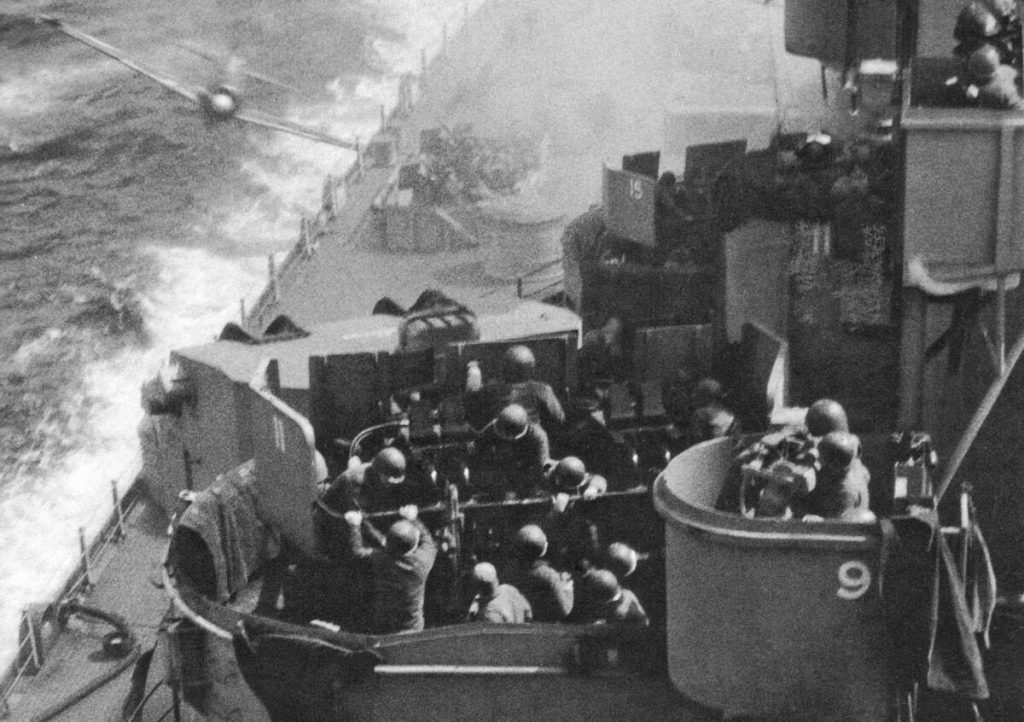
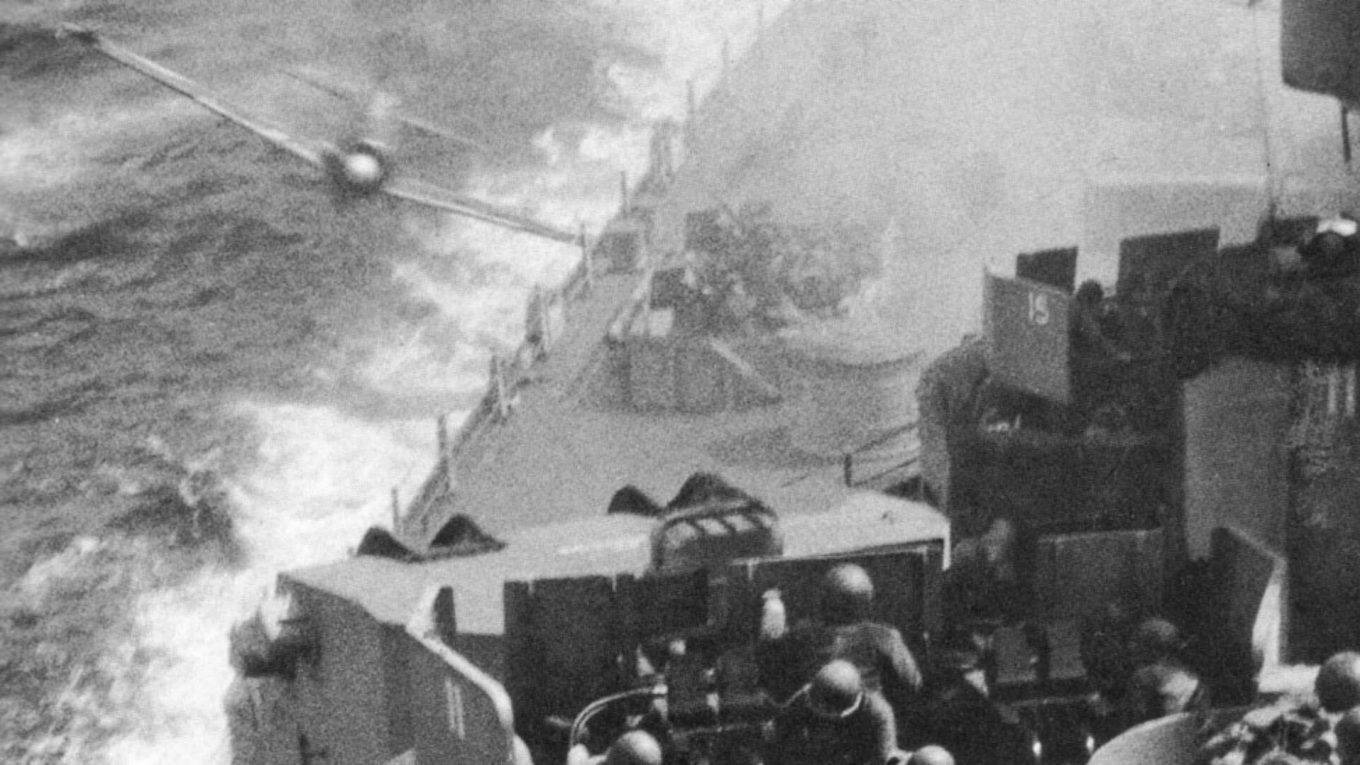
What followed was chaotic and violent. While anti-aircraft fire brought down many of the attacking planes, several kamikazes penetrated the defenses, damaging multiple ships. At 2:43 p.m., one of the most iconic images of the Pacific War was captured as a Mitsubishi A6M Zero, flown by 19-year-old pilot Setsuo Ishino, slammed into the battleship USS Missouri. The aircraft disintegrated on impact, scattering wreckage, and the pilot’s body, across the deck. In a striking gesture of respect amid the brutality of war, Ishino was later given a burial at sea by the American crew, his body wrapped in a makeshift Japanese flag before being committed to the depths.