
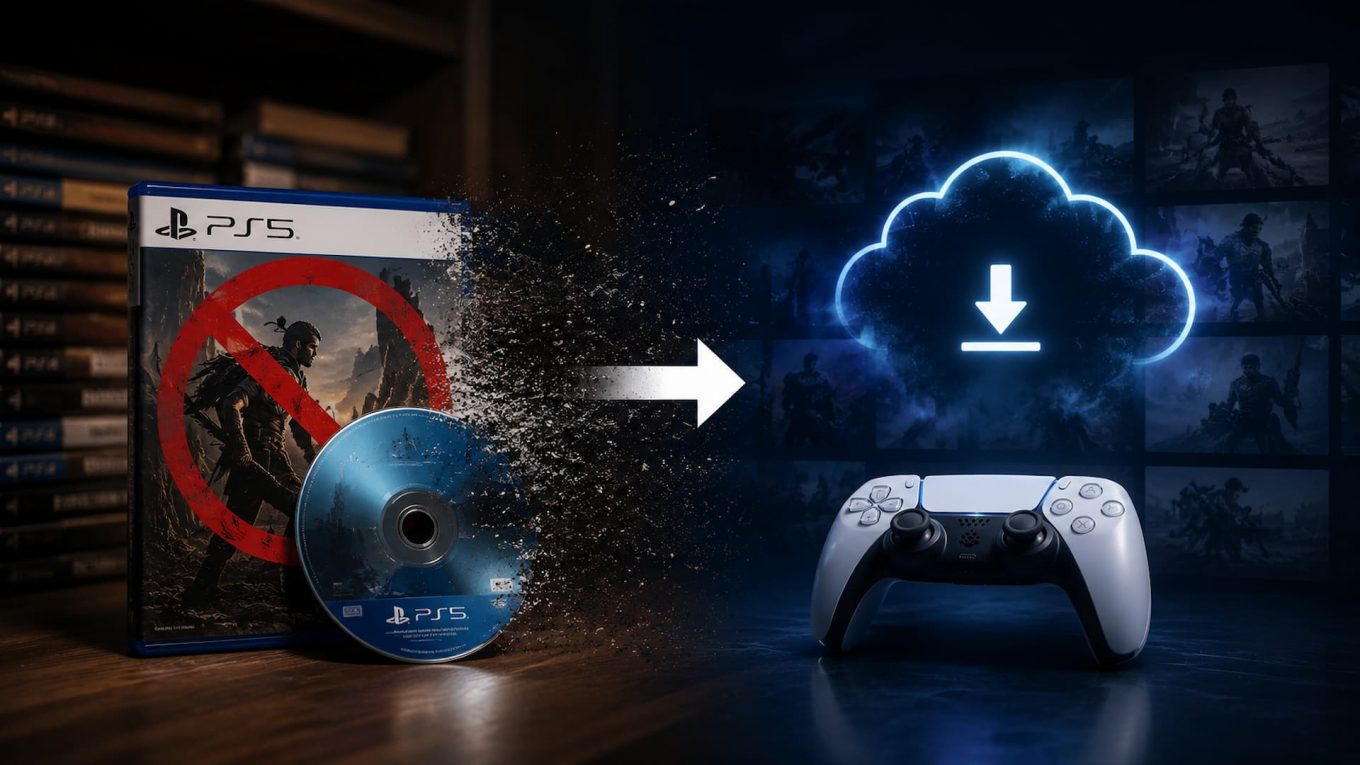
Sony – The End of Discs or a New Era for Physical Media?
Sony’s announcement that it plans to move away from distributing games on physical discs has understandably caused a reaction. For many collectors, gamers, and physical media supporters, it feels like another warning sign that the industry is pushing us towards an all-digital future.
However, the interesting part is the timeline. With a date reportedly set around 2028, this isn’t something happening overnight. It feels like a carefully measured move that gives Sony time to prepare the market, allow everyone to have their initial reaction, and then watch how things develop over the next couple of years.
In many ways, this announcement feels less like a final goodbye and more like Sony testing the waters.
The timing is especially interesting given the wider conversation around physical media. Amazon has recently indicated a renewed interest in physical releases, recognising that there is still a dedicated and potentially profitable market out there. After all, Amazon sells these products, they have access to the numbers and will know better than most whether physical media still has a passionate customer base.

The future of discs may not be about mass-market shelves filled with endless stock. Instead, it could become something more specialised: limited runs, collector-focused releases, premium packaging, and carefully curated editions designed to sell through without huge amounts of unsold inventory.
For film fans, we are arguably already there. Boutique labels have shown there is still demand for beautifully restored movies, packed with special features, artwork, books, and extras. Physical media is evolving from something everyone bought because it was the only option into something people actively choose because it offers ownership, quality, and permanence.
Sony’s decision won’t have been made overnight. This is likely something the company has been considering for a long time while watching physical game sales decline and digital purchases become the dominant format, and that’s honestly a sensible strategy.
Ironically, the announcement itself may even cause a temporary increase in physical purchases as some consumers react by buying more games while they still can, although some may get an unpleasant surprise when they discover certain modern “physical releases” are little more than a box containing a download code rather than an actual disc.
And that is where the bigger issue lies: ownership.
The recent situation involving Sony and the loss of licensing agreements for hundreds of StudioCanal titles highlighted a growing concern among consumers. When your purchases exist only in a digital library, how much control do you really have? Are you buying something permanently, or are you effectively paying for extended access that depends on licensing agreements remaining in place?
As streaming services become more expensive, content libraries constantly change, and purchased digital titles come with increasingly complicated terms and conditions, younger generations may actually start to understand the appeal of physical ownership. A disc on your shelf doesn’t vanish because a contract expired.
I would not be surprised if Sony reviews the situation towards the end of 2027 or early 2028 before making the final move. A lot can happen between now and then, and the current physical media revival shows that consumer habits are not always as predictable as corporations expect.

My bigger concern isn’t whether physical media survives. I believe it will. My concern is affordability. Curating, not simply collecting, a movie library is becoming an increasingly expensive hobby. We are already seeing business models designed around maximising profits from smaller audiences. Limited editions, premium releases, and small print runs create urgency and tap directly into the fear of missing out. The early adopters pay the highest prices, while those willing to wait sometimes get cheaper standard editions later.

Normally capitalism suggests more choice leads to more competition and lower prices. Physical media is slightly different because films are usually licensed exclusively to one distributor. If only one company has the rights to release a particular movie, there is no real price war to be had.

Still, physical media has survived many predicted deaths before. The one thing that does worry me about Sony leaving discs behind is what it means for the next generation of consoles. A PlayStation 6 without a disc drive feels increasingly likely, and that would be a major symbolic shift.
The irony is that PlayStation played a huge role in the success of physical media. The PlayStation 2 helped DVD become mainstream by putting a DVD player into millions of homes. Later consoles continued that tradition with Blu-ray and 4K playback.

Remove the disc drive, and suddenly millions of households lose one of the easiest ways to play physical movies. I’d imagine a huge number of PlayStation 4 and PlayStation 5 owners have picked up at least one Blu-ray or 4K UHD movie over the years simply because they already had a player sitting under the television.
Whatever happens next, I don’t think physical media is finished. It is changing.
The mass-market era may be fading, but the audience who value ownership, presentation, quality, and preservation are still here, and they might end up being the very people who keep discs alive for years to come. Ironically, Amazon might be the key!