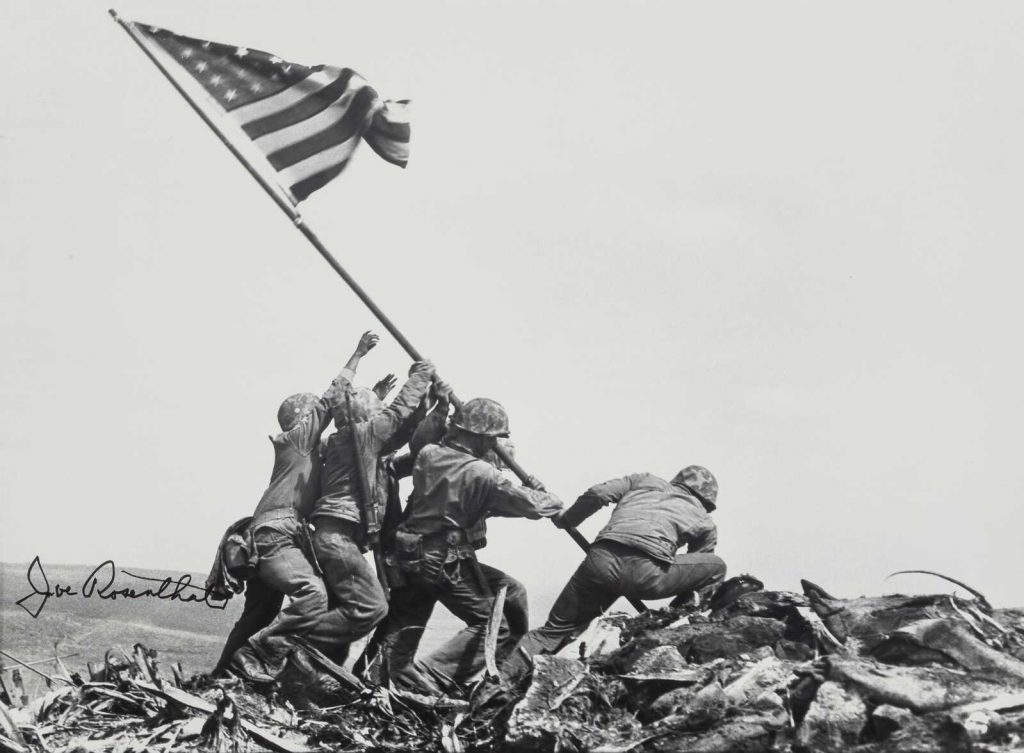
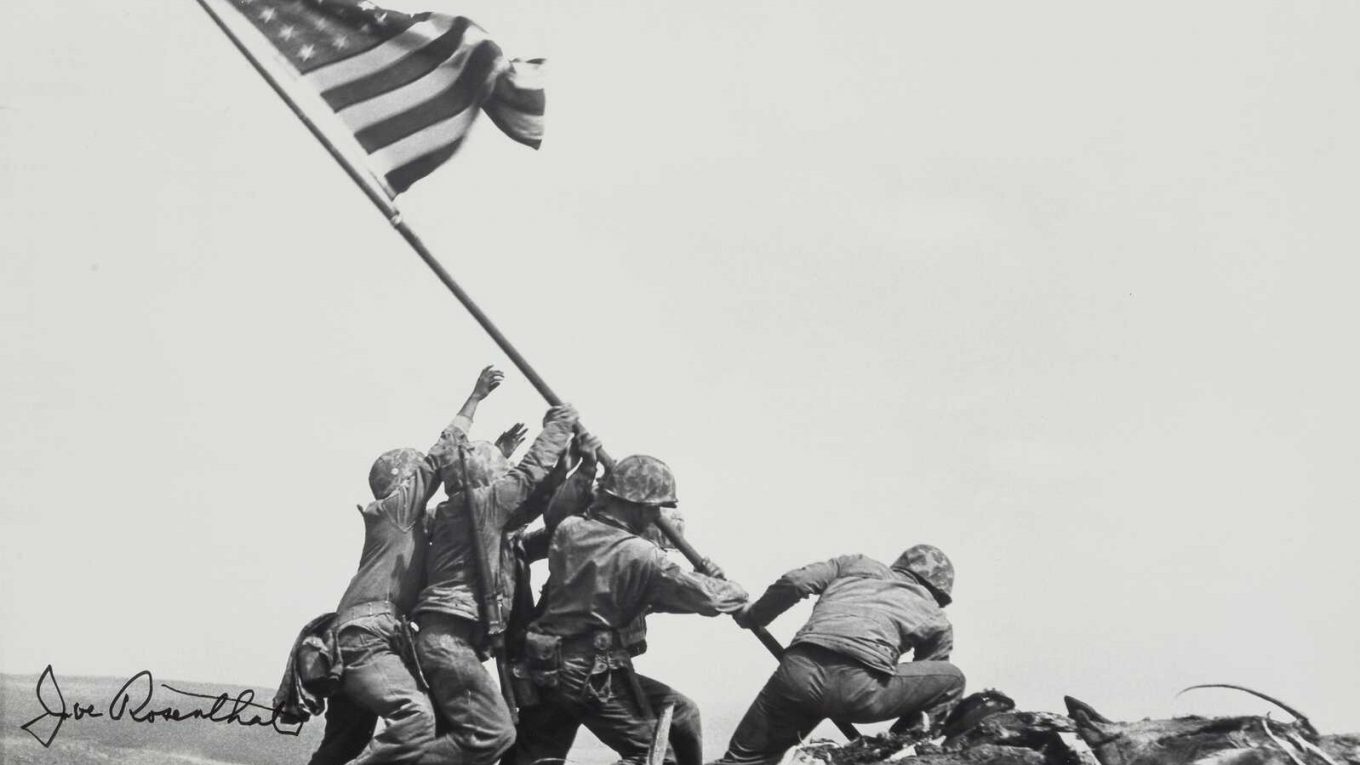
The Raising of the U.S. Flag on Mt. Suribachi, Iwo Jima
“The Raising of the U.S. Flag on Mt. Suribachi, Iwo Jima,” photographed by Joe Rosenthal, became one of the defining images of World War II, a moment so impactful it earned Rosenthal the Pulitzer Prize and cemented its place in history as perhaps the most iconic American wartime photograph.
Yet behind the image lies a far more complex. The Marines who took part in the flag raising were thrust into sudden fame, celebrated as symbols of victory while still grappling with the brutal reality of war. Many carried a deep sense of guilt for surviving when so many of their fellow soldiers did not. The weight of that recognition proved difficult to bear, turning triumph into something far more emotional.
Among them, Ira Hayes stands as a particularly tragic figure. Haunted by his experiences and the attention that followed, Hayes struggled greatly in the years after the war. His story resonated so deeply that it inspired Johnny Cash to write the haunting ballad The Ballad of Ira Hayes, a tribute that underscores the sorrow and complexity behind a photograph so often seen as a simple symbol of victory.